- Daniel TM. The history of tuberculosis. Respir Med. 2006 Nov;100(11):1862-70. doi: 10.1016/j.rmed.2006.08.006. Epub 2006 Sep 1. PMID: 16949809.
- Barberis I, Bragazzi NL, Galluzzo L, Martini M. The history of tuberculosis: from the first historical records to the isolation of Koch's bacillus. J Prev Med Hyg. 2017 Mar;58(1):E9-E12. PMID: 28515626; PMCID: PMC5432783.
- Sakula A. Robert Koch: centenary of the discovery of the tubercle bacillus, 1882. Thorax. 1982 Apr;37(4):246-51. doi: 10.1136/thx.37.4.246. PMID: 6180494; PMCID: PMC459292.
- Gradmann C. Robert Koch and the white death: from tuberculosis to tuberculin. Microbes Infect. 2006 Jan;8(1):294-301. doi: 10.1016/j.micinf.2005.06.004. Epub 2005 Aug 8. PMID: 16126424.
- Houston M. The white death: A history of tuberculosis. BMJ. 1999 Jun 19;318(7199):1705. doi: 10.1136/bmj.318.7199.1705. PMID: 10373196; PMCID: PMC1116046.
- Zumla A, Raviglione M, Hafner R, von Reyn CF. Tuberculosis. N Engl J Med. 2013 Feb 21;368(8):745-55. doi: 10.1056/NEJMra1200894. PMID: 23425167.
- Global tuberculosis report 2025. Geneva: World Health Organization; 2025. Licence: CC BY-NC-SA 3.0 IGO.
Tuberculosis: the long history of the “white plague”
Long before antibiotics and microbiology, tuberculosis shaped societies, medical thinking and public health systems. Its history mirrors the gradual emergence of modern medicine.
An ancient disease accompanying humanity
Few infectious diseases have accompanied human history as persistently as tuberculosis. Archaeological and molecular evidence suggests that the genus Mycobacterium may have emerged millions of years ago and that early forms of Mycobacterium tuberculosis infected hominids long before recorded history.
Skeletal deformities consistent with tuberculous infection have been identified in Egyptian mummies dating back more than four millennia, including characteristic spinal deformities compatible with what is now known as Pott’s disease.
Historical records from ancient India and China also describe symptoms compatible with tuberculosis, suggesting that the disease was widely recognized long before the emergence of scientific medicine.
In classical antiquity, tuberculosis was known as phthisis. Physicians in ancient Greece carefully described the condition, recognizing its chronic course and its devastating prognosis. Clinical features such as persistent cough, fever, hemoptysis and progressive wasting were already noted.
These early observations demonstrate that tuberculosis was not merely present but already understood as a distinct clinical entity in ancient medical traditions.
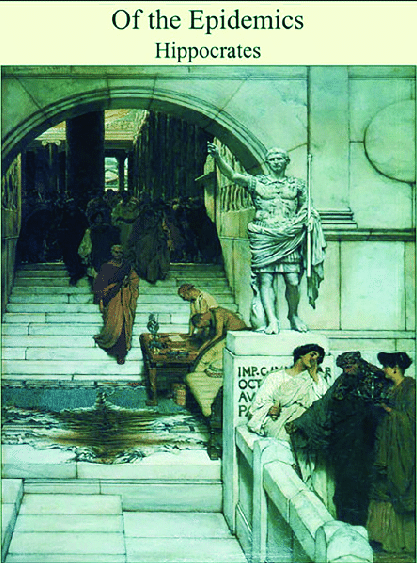
The Greek physician, Hippocrates, recognized tuberculosis and understood its clinical presentation. In Book 1, Of the Epidemics, he refers to it as phthisis (The tuberculosis timeline: Of white plague, a birthday present, and vignettes of myriad hues - Scientific Figure on ResearchGate)
From medieval beliefs to early medical theories
During the Middle Ages, tuberculosis continued to shape medical and cultural perceptions of disease. One of its most recognizable forms was scrofula, a tuberculous infection of cervical lymph nodes that became known as the “king’s evil.”
For centuries it was believed that scrofula could be cured through the royal touch, a ritual practiced by English and French monarchs. The ceremony persisted until the eighteenth century in England and even longer in France, illustrating how closely medicine, religion and political authority were intertwined in pre-modern societies.
At the same time, physicians gradually began to formulate more scientific interpretations of the disease. In the sixteenth century, the Italian physician Girolamo Fracastoro proposed that certain diseases might be transmitted by invisible particles, an early theoretical framework for contagion.
Further anatomical understanding emerged during the seventeenth century. Physicians such as Franciscus Sylvius described characteristic lung lesions and the formation of tubercles, providing the pathological basis that would later give tuberculosis its modern name.
The “white plague” of the industrial age
By the 18th and 19th centuries, tuberculosis had reached epidemic proportions in Europe and North America. Rapid urbanization, overcrowded housing, malnutrition and poor sanitation created ideal conditions for transmission.
Mortality rates in some regions of Western Europe reached 900 deaths per 100,000 inhabitants per year, making tuberculosis one of the leading causes of death. The disease became widely known as the “white plague”, a reference to the pale, wasted appearance of affected individuals. In many cities tuberculosis accounted for one in four deaths, particularly among young adults.
The social impact of the disease was enormous. Entire families could be affected, and the slow progression of the illness contributed to its powerful cultural presence in literature and art. Medical debates during this period reflected the limited understanding of its causes. Some physicians considered tuberculosis hereditary, while others suspected an infectious origin.
One of the key steps toward resolving this debate came in 1865, when the French physician Jean-Antoine Villemin demonstrated that tuberculosis could be transmitted experimentally by inoculating material from infected patients into laboratory animals.
His work provided strong evidence that the disease was caused by a specific infectious agent.
Robert Koch and the birth of modern bacteriology
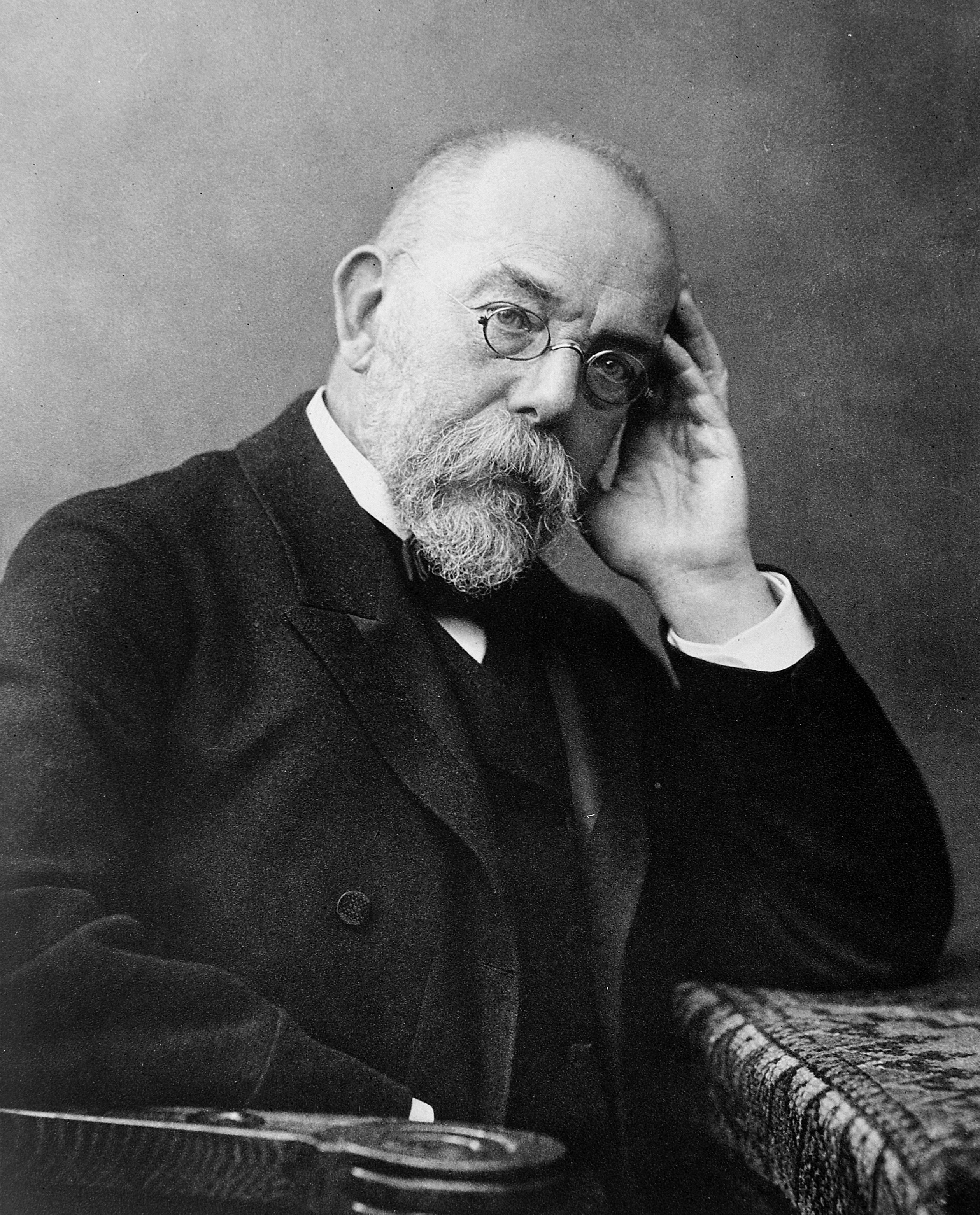
The decisive breakthrough in the scientific understanding of tuberculosis occurred on 24 March 1882, when Robert Koch presented his discovery of the tubercle bacillus to the Berlin Physiological Society in Berlin.
Using innovative laboratory techniques, Koch demonstrated that a specific microorganism was responsible for tuberculosis.
By applying improved staining methods based on alkaline methylene blue and developing culture techniques using coagulated blood serum, he was able to identify, isolate and grow the bacillus later named Mycobacterium tuberculosis. He subsequently reproduced the disease in experimental animals after inoculation with cultured bacilli, thereby establishing a direct causal relationship between the microorganism and the disease.
Heinrich Hermann Robert Koch (Wilhelm Fechner http://www.mic.ki.se/West.html)
Koch’s work provided one of the most compelling demonstrations of the emerging germ theory of disease and helped establish the methodological framework that would later become known as Koch’s postulates, which defined the criteria for linking specific microorganisms to specific diseases.
The impact of this discovery was immediate and profound. For the first time, tuberculosis was understood not as a hereditary or constitutional disorder but as an infectious disease with a defined etiological agent. In recognition of his contributions to microbiology and infectious disease research, Koch was awarded the Nobel Prize in Physiology or Medicine in 1905.
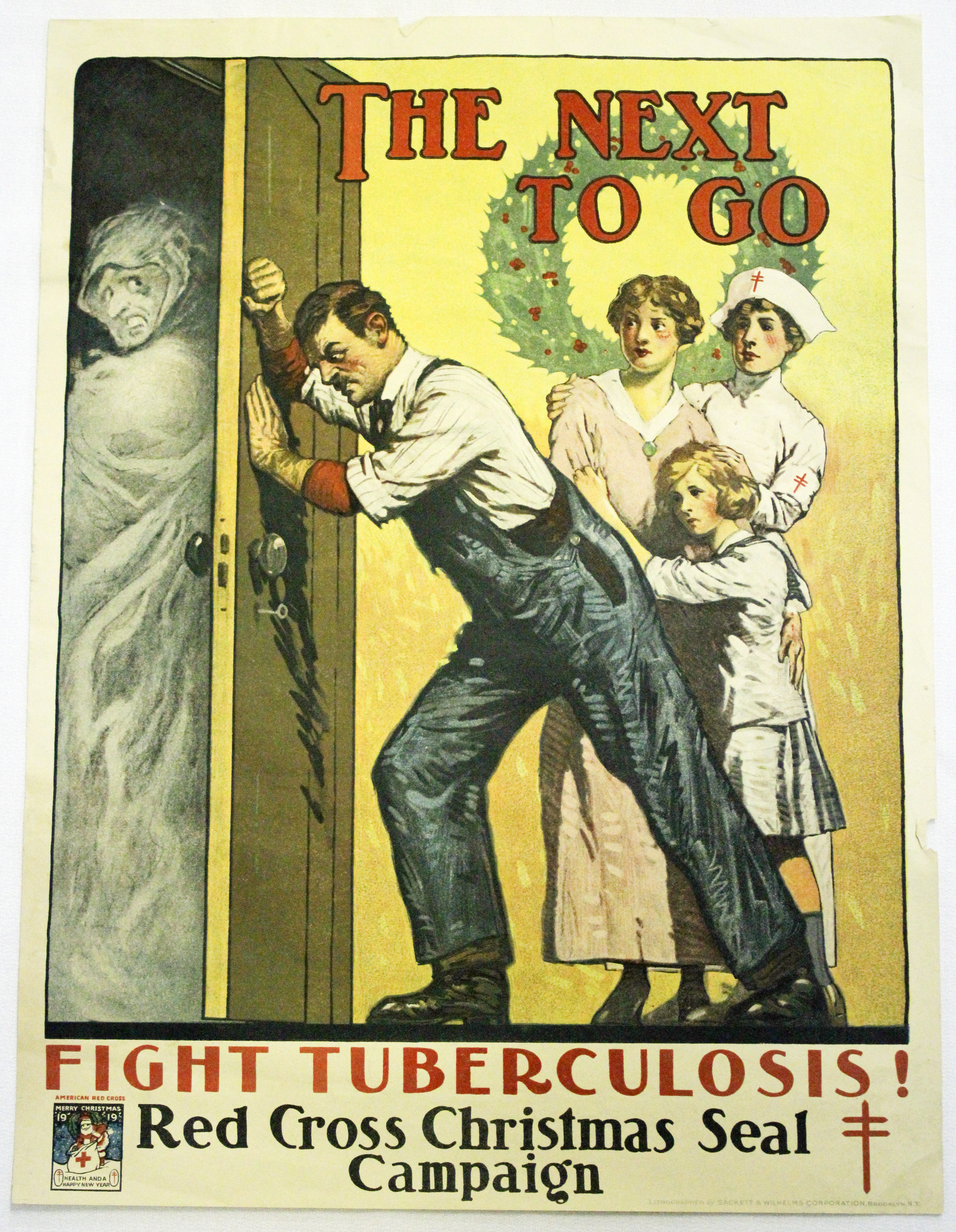
American Red Cross poster promoting a Christmas seal campaign to raise money to fight tuberculosis, c. 1919 (Library of Congress, Washington, D.C. - LC-DIG-ppmsca-43170)
From sanatoria to antibiotics
Even before the development of antimicrobial therapy, physicians attempted to manage tuberculosis through environmental and supportive strategies.
The sanatorium movement, which expanded across Europe and North America during the nineteenth century, promoted treatment based on prolonged rest, exposure to fresh air and improved nutrition. Sanatoria were often located in mountain or forest environments, reflecting the belief that clean air and a controlled lifestyle could improve patient outcomes. Although these approaches rarely cured tuberculosis, they sometimes prolonged survival and played an important role in reducing transmission through patient isolation.
A major step toward prevention came in the early twentieth century with the development of the Bacille Calmette–Guérin (BCG) vaccine, introduced in 1921 by Albert Calmette and Camille Guérin. The vaccine remains widely used in many countries, particularly to prevent severe forms of tuberculosis in children.
The true therapeutic revolution, however, arrived in the mid-twentieth century. In 1944, Selman Waksman and his colleagues discovered streptomycin, the first antibiotic effective against Mycobacterium tuberculosis. This was followed by the development of additional drugs, including para-aminosalicylic acid and isoniazid, which enabled the introduction of combination therapy and dramatically improved treatment outcomes.
These advances transformed tuberculosis from a frequently fatal disease into a largely treatable condition when diagnosed early and managed with appropriate multidrug regimens.
Tuberculosis in the twenty-first century
Despite these advances, tuberculosis remains one of the most significant infectious diseases worldwide. According to the World Health Organization Global Tuberculosis Report 2025, an estimated 10.8 million people developed tuberculosis in 2023, including around 6 million men, 3.6 million women and 1.3 million children.
Tuberculosis caused approximately 1.25 million deaths among HIV-negative individuals, with an additional 161,000 deaths among people living with HIV, making it one of the leading causes of death from a single infectious agent.
The global burden of disease is unevenly distributed. A small group of countries accounts for the majority of cases, including India, Indonesia, China, the Philippines and Pakistan. Social determinants such as poverty, overcrowding, malnutrition and limited access to healthcare continue to play a crucial role in transmission and disease progression.
Treatment today relies on combination antibiotic therapy, typically including isoniazid, rifampicin, ethambutol and pyrazinamide during the initial phase of treatment, followed by continuation therapy with fewer drugs. However, the emergence of multidrug-resistant tuberculosis (MDR-TB) and rifampicin-resistant strains represents a major challenge for global control efforts.
Vaccination also plays an important role in tuberculosis prevention. The Bacille Calmette–Guérin (BCG) vaccine, introduced in 1921, remains the only licensed vaccine against tuberculosis and is still widely used in many parts of the world.
BCG vaccination is primarily administered to newborns and infants in countries with high tuberculosis incidence, where it provides protection against severe forms of the disease in childhood, such as tuberculous meningitis and disseminated tuberculosis. However, its protective efficacy against pulmonary tuberculosis in adults is variable, which explains why routine BCG vaccination is not universally recommended in low-incidence countries.
For example, BCG vaccination is part of routine childhood immunization programs in many countries in Africa, Asia and parts of Eastern Europe, whereas in countries with low TB incidence it is typically reserved for selected high-risk groups.
Alongside vaccination, global TB control strategies focus on early diagnosis, effective treatment and preventive therapy for individuals with latent infection. The WHO End TB Strategy aims to drastically reduce tuberculosis incidence and mortality through improved access to diagnostics, new drugs, preventive interventions and research on more effective vaccines. The strategy sets ambitious targets for the coming decades, including a dramatic reduction in tuberculosis incidence and deaths by 2035.
The long history of tuberculosis therefore continues to evolve. From ancient skeletal lesions to modern molecular diagnostics, the fight against this disease reflects both the achievements and the ongoing challenges of global medicine.